



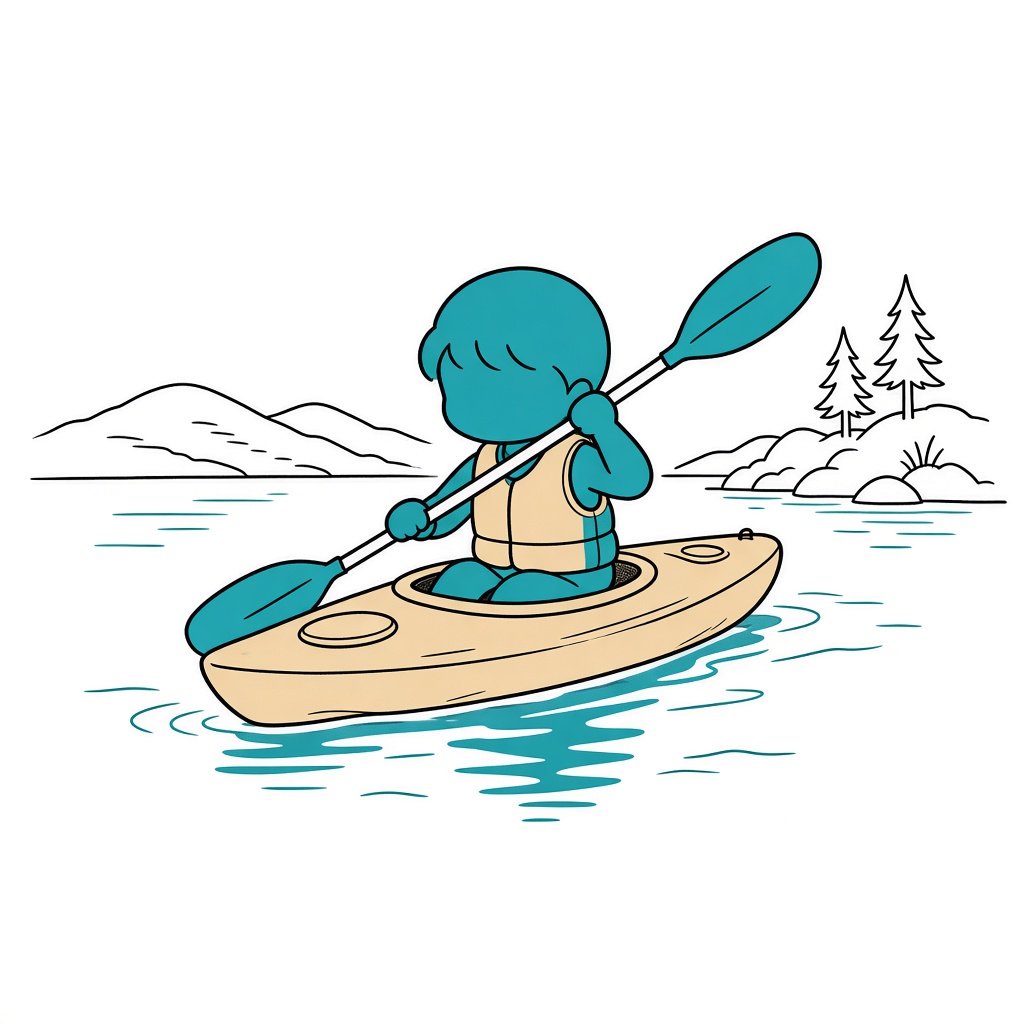
ACA Level 1: Introduction to Kayaking(入门划桨体系,海岸课的第一级). L1 是把人安全送上船、能在平静水里移动和翻船后自处的一级。不要求海岸浪、潮汐或滚翻。技术只要求「做到能用、能停、能离开座舱」,不要求两边一样漂亮。
水域与窗口
遮蔽、可随时上岸的平水(湖、避风港湾)。风浪与潮流都应很小,教练能站在近岸纠正。
该级要做到什么程度
会正确穿着浮力背心;能在岸上搬艇、上下艇;喷裙若使用,须能从抓手环和第二种方式解脱。
完全翻覆后保持镇定离开座舱,不在未翻稳前慌乱脱身。
能大致直线前进与后退,并从一定速度在短距离内停下,不因停艇而翻。
能用扫桨让船头转向;此级允许动作生疏,但船要转得动。
能让船有侧向移动的意识;失去平衡时会用低撑撑住,不要求高压或滚翻。
会靠帮(raft up)、听从简报;救援以认识步骤和配合为主,不要求在浪里完成 T 救援。
课上教什么
岸上:装备、抓手环、翻船后第一反应。近岸:上下艇、直线划、停、扫桨。浅水或可站区域练湿翻。把动作串成一小圈,而不是讲桨叶解剖。
ACA 常见时长版本
ACA 入门课常见的短版本:只覆盖安全、湿翻、前进/停/转向,适合完全零基础的半天。
把横移、低撑和简单同伴配合也练完。教练可按人数与场地把同一大纲拆成两段。
L1 以技能课为主。是否单独做评估,以当期 ACA 文件和开班说明为准。
以下为该级别对应的最新 ACA 官方教学指导原文(Skills Course),仅作对照参考。版权属 American Canoe Association。上文是 Kayacool 的说明,不是对原文的替换。
Level 1: Introduction to Kayaking Skills Course
Course Overview
The Introduction to Kayaking course is designed as a short program emphasizing safety, enjoyment and skill acquisition for entry level individuals in public, private, and commercial settings.
Note: The use of spray skirts is not appropriate for Level 1: Introduction to Kayaking courses.
Course Prerequisites
- Acknowledgment of personal compliance with the ACA Essential Eligibility Criteria (EEC)
- Agree to comply with the ACA Code of Conduct
- No prior paddling experience or training is required to participate in this course
Course Duration
The course duration should be adjusted to best fit the needs and goals of the participants. Suggested time: Half a day to one day (4-8 hours).
Course Location / Accessible Venues
Flat water, protected from wind, waves, and outside boat traffic, with current less than 0.5 knots, and within swimming distance of shore.
Number of Participants
5 participants : 1 Instructor; with an additional instructor, the ratio can be 10 : 2.
Instructor
Level 1 or higher ACA Instructors within their discipline.
Possible Course Outline: Duration 8 Hours
The following is a general summary of course content for the Level 1: Introduction to Kayaking course. The content covered and sequence of instruction should be adjusted to best fit the participant’s needs, class location, and time allowance. The course content includes the National On Water Standards for human powered craft. The Level 1 rubric is in the National On Water Standards for human powered craft, pages 17-65.
Introduction, Expectations, and Logistics
Introduction, Expectations, and Logistics:
- Welcome, introductions, paperwork
- Student and Instructor course expectations and limitations
- Course itinerary and site logistics
- Review waiver, assumption of risk, challenge by choice, medical disclosure
- About the ACA
- Life jacket policy (always wear on water)
- Appropriate personal behavior
- No alcohol / substance abuse
- Proper etiquette on and off the water
- Respect private property
- Practice Leave No Trace ethics
Preparing to Depart
- Discuss current weather conditions, forecasts, and other environmental hazards (water, weather, wind, waves)
- Evaluate hazards to navigation
- Discuss importance of developing good judgment, group responsibility, and management
- Evaluate individual’s ability, water comfort, and confidence prior to trip
- Warm up to reduce injury
- Make sure the kayak is securely fastened to the car or racks, using proper tie downs, straps, or knots.
- Review proper techniques to safely lift and carry the kayak on shore
- Review life jackets appropriate for the paddler’s size, kayak, and activity, assuring all others in the group are properly wearing their life jacket
- Inspect the kayak and all safety equipment to meet state, federal, and local requirements for the vessel and activity
- Describe and follow safe boating practices (behavior, substance abuse, on water and land etiquette, Leave No Trace ethics)
- Review elements of a float plan (Who, What, When, Where, filing practices)
- Review personal equipment needed for the kayak, activity, and environment
- Prepare kayak for departure: stowing gear securely, and ensuring it is balanced
- How to hold the paddle in correct orientation and grip for effective paddling
Maneuvers: to be performed with appropriate and efficient strokes, while maintaining the trim and balance of the kayak
- Enter and launch the kayak from shore in a controlled manner, checking for clear departure
- Propel the kayak forward in a straight line 15-20 kayak lengths
- Stop the kayak within two kayak lengths
- Move the kayak backwards 3-4 kayak lengths
- Turn the kayak from a stationary position 180° to the right and left
- Move the kayak sideways 10 feet (3 meters) to each side
- Propel the kayak in a figure of 8 course around markers 3-4 kayak lengths apart
- Turn the kayak while maintaining forward motion 90° to the right and left
- Arrive at destination point, checking for clear approach, and exit the kayak in a controlled and safe manner
Technical Knowledge
- Review paddling equipment, terminology (boat and paddle), and care of gear
- Instructor review of additional personal and group gear, including, but not limited to:
- Environmental supplies (food, water, appropriate clothing, sunscreen, etc.)
- Navigational and signaling tools (maps, charts, whistle, etc.)
- Safety and rescue tools
- Repair kit
- First aid kit (appropriate to training)
- Review the dangers of paddle sports and how to plan an appropriate course to avoid potential hazardous situations.
- How to avoid and prevent cold water shock, hypothermia and hyperthermia by choosing proper clothing; recognizing and treating early symptoms; 1-10-1 rule.
- Recognize the importance of hydration
- Recognize and appropriately use communication (paddle/oar and whistle) signals
- Review basic navigational rules for inland waterways
- Develop awareness of the group and effective on water management techniques
- Describe best paddling practices: posture, balance, awareness of body-boat-blade relationship
- Secure the boat and equipment before leaving unattended, with attention paid to environment and conditions
Safety and Rescue
- Principles of Rescue
- Use of safe rescue strategies such as T-RETHROG (Talk, Reach, Throw, Row, Go)
- Rescue priorities: people, kayak, paddle, gear
- Responsibilities of: rescuer, group, swimmers
- Identify and demonstrate the use of appropriate rescue and safety gear for the kayak and planned activity
Swimming and Wading Skills
- Understand the risks associated with standing and walking in the types of environments mentioned above (including entanglement and environmental hazards)
- Understand the pros and cons of different swimming positions
- Self-rescue: swimming with equipment
- Strategies to conserve energy
Kayak-Based Rescues
- Advantages and disadvantages during rescues of various kayaks (e.g., sit-ins, sit-on-tops, recreational kayaks)
- Calmly exit the kayak after capsize, using proper body position and contact with the kayak and paddle.
- Paddle recovery options
- Strategies for kayak recovery
- Swimmer tow options
- Swimmer re-entry / re-mount techniques (e.g., stern entry, heel hook, rescue sling, paddle float)
- Kayak bumping / bulldozing
- Kayak towing
- Kayak specific rescues (e.g., boat over boat, boat to boat, scoop)
- Unresponsive paddler rescue
- Emptying water from kayak (e.g., on-shore, bailers, pumps)
Conclusion and Wrap Up
- Group debrief / individual feedback
- Course limitations
- Importance of First Aid and CPR
- Importance of additional instruction, practice, and gaining experience
- Importance of appropriate level of safety and rescue training
- Life sport / paddling options
- Local paddling groups / clubs
- Handouts / reference materials
- Participation cards
- ACA membership benefits and join process
This course content meets the National On Water Standards for human powered craft (NOWS). The National On Water Standards for human powered craft (NOWS) can be used to:
- Evaluate other paddlers and provide effective feedback
- Effectively make documented skill assessments
© American Canoe Association
Date of last revision: 10/28/2025
This curriculum is managed by the ACA Introduction to Paddling (IPC) Committee.