



In Kayacool ACA coastal courses the forward stroke is the movement you repeat all day. The notes below split it into boat–body–blade–water: why the boat moves, how to teach it, and how to change it for water, weather, and body type.
1. One mechanical picture: plant the blade; the boat slides past
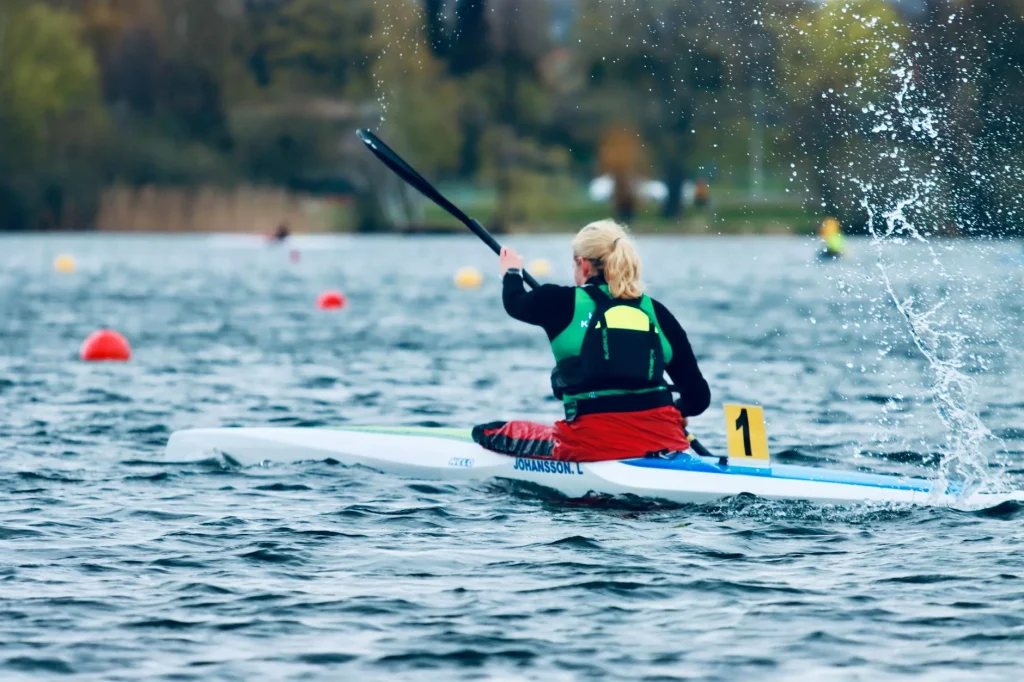
A forward stroke is not scooping water backwards. Newton’s third law: the blade pushes water aft (and slightly out/down); water pushes the blade with an equal and opposite force; that force travels through arms, trunk, hips and footrests into the hull. The ICF sprint coaching manual describes a technically good draw as the blade staying near the catch once it is buried, so the boat is drawn to that “peg” instead of the blade slipping a long way astern.[1]
Sea-kayak coaches say the same thing in different words: Northwest Outdoor Center uses wet cement; CanoeSport Outfitters, Ventura Canoe & Kayak Club and PaddleGeek all describe the boat moving past a planted blade — sometimes the blade even ends up ahead of the entry point relative to the shore.[2][3][4][5]
How we use it: a sea-kayak Euro blade still slips a little; a sprint wing blade uses lift to keep slip small.[1] Teach “plant and hold” as the direction of travel, not as an Olympic zero-slip demand.
2. Hydrodynamics: most of the fight is hull drag
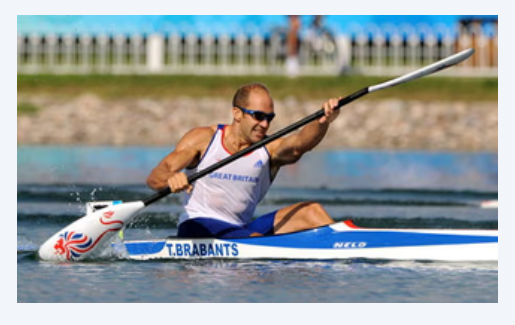
ICF splits resistance into roughly 93% water and 7% air. Air is about 832 times less dense than water, so it is often ignored — until a light paddler meets a strong headwind.[1] Water drag splits again:
- Skin friction ~80%: wetted area, roughness, temperature and salinity (viscosity). Extra heel or extra immersion raises it.
- Wave-making ~18%: speed, waterline length, depth. Shallow or confined water changes the wave system and can suck the hull down.[1]
- Pressure / form ~2% on a sharp sprint bow. A sea kayak’s higher bow and wider deck make this share larger than the sprint table, but it is still usually smaller than friction and waves.
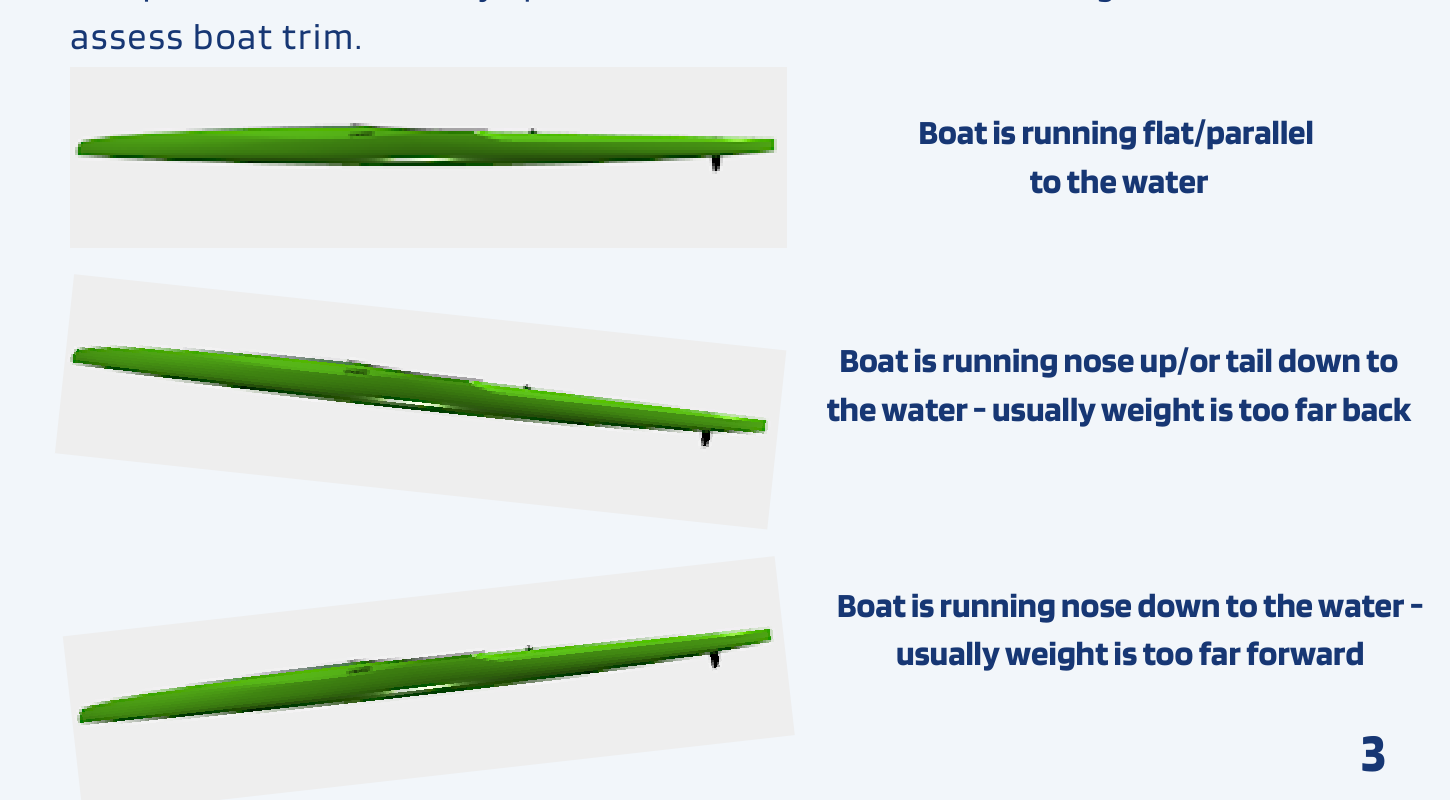
ICF also separates passive drag (shape, displacement, finish) from active drag (technique). British Canoeing names three extra motions: roll (weight off the working blade), pitch (blade past the hip acting as a brake), yaw (collapsed spine, top hand across the centreline).[1][6] A sea kayak is wider, so you may not capsize — you just spend the day slower.
At similar length and speed, more displacement means more wetted area. ICF’s example: 50 kg and 90 kg in the same hull at the same speed — the heavier paddler must produce more power.[1] For touring that means cleaner technique after you load water and rescue kit, not a bigger blade as the first answer.
3. What the blade does: drag, lift, and a brake at the exit
The paddle is not bolted to the boat; force travels through the paddler’s body as an elastic link.[1] With an angle of attack the resultant splits into:
- Drag along the relative flow — the main mid-stroke contribution of a Euro blade.
- Lift perpendicular to that flow. ICF describes the post-1987 wing blade as producing useful lift, a firmer catch, and a demand for explosive trunk rotation.[1]
Instrumented sprint-canoe blade work (Jackson et al.) is cited only for the shape of the story: large propulsive force late in the catch; strong propulsion in the draw with vertical force turning downward; propulsion collapsing toward the exit if the blade is still lifting water.[7] Do not copy the newtons onto a loaded sea kayak.
CanoeSport Outfitters: continuing past the hip and rolling the blade scoops water — a brake and a capsize nudge.[3] Exit at the hip with a slice. PaddleGeek’s catch / power / exit model stops the power phase at the hip as well.[5]
How we use it: NWOC’s top-down path starts near the toes and moves slightly out by the hip.[2] CanoeSport wants the path close to the hull to avoid yaw.[3] We split by angle: high-angle acceleration stays tighter; low-angle touring may flare slightly, but must not become a sweep.
4. Two coaching frames stacked
Ventura uses Catch / Pull / Exit / Recovery. On a kayak the recovery is short because the other blade is already coming.[4] Sea-kayak touring simply runs the same cycle slower.
4.1 Catch
Wind the trunk, plant near the toes and close to the boat, bury the whole blade before you pull.[2][3][8] Sprint literature adds thorax pre-rotation of about 35–45° relative to the pelvis, a straighter top arm adding roughly 8–12 cm of reach if rotation is already there, and up to about 20% lost propulsion from a partial burial.[9] Use those figures as a ruler for “rotate and bury”, not as a touring range-of-motion test.
4.2 Power / Pull
Bottom to top: same-side foot on the brace → hip and chest unwind → arms as struts.[2][3][6] Ackland et al. on elite K1: about 58–65% of stroke impulse from trunk rotation and hip drive.[9] Sprint top hand stays near face height and travels forward, not down; low-angle touring lowers that line but should not smash the top hand toward the knees.[6][8]
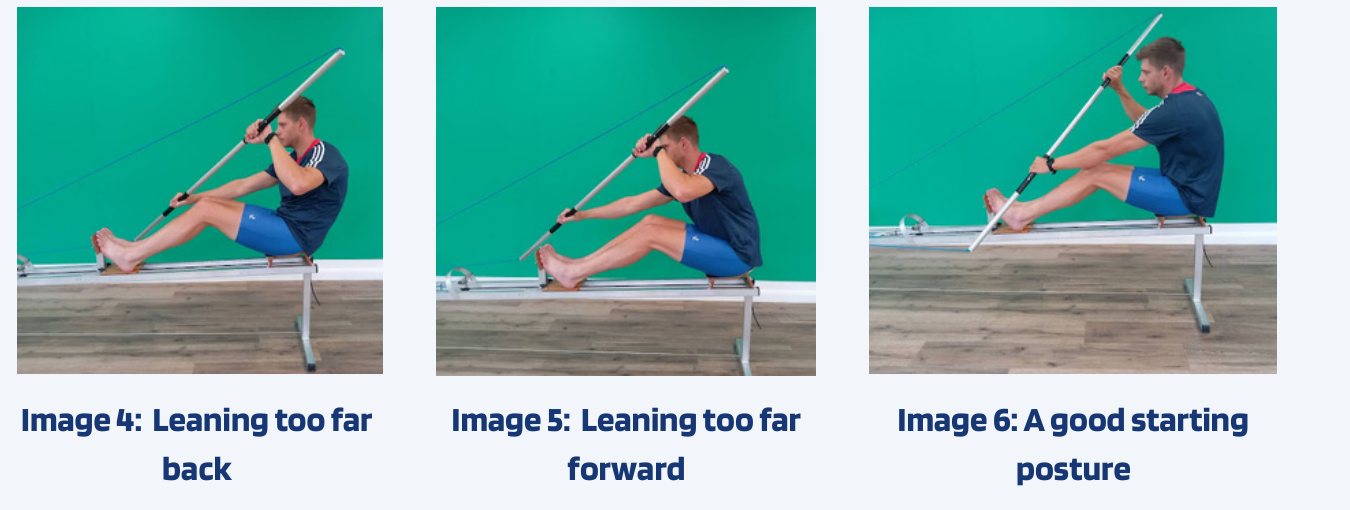
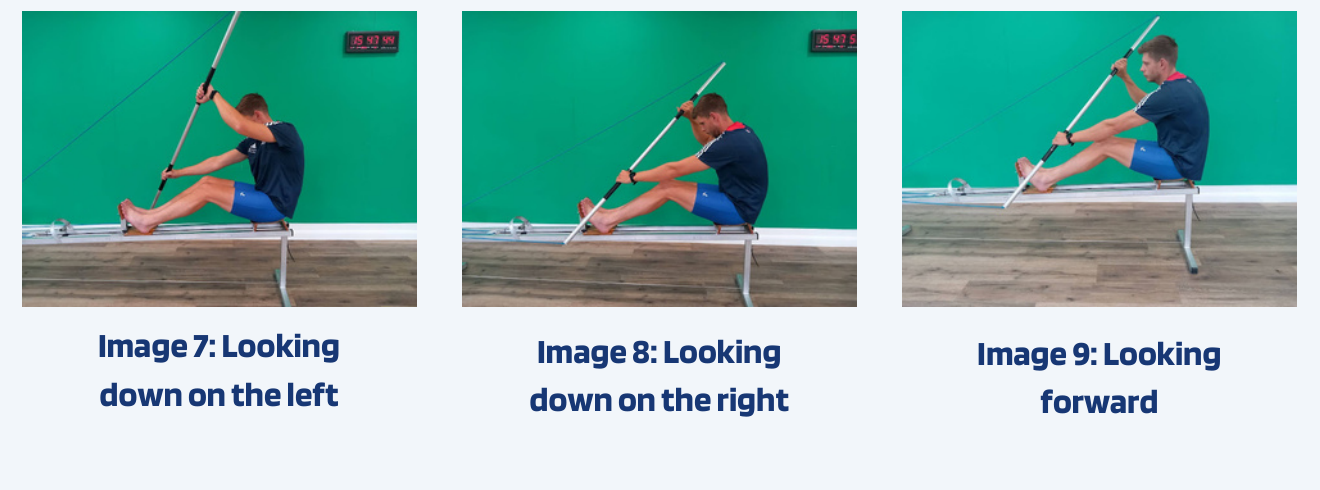
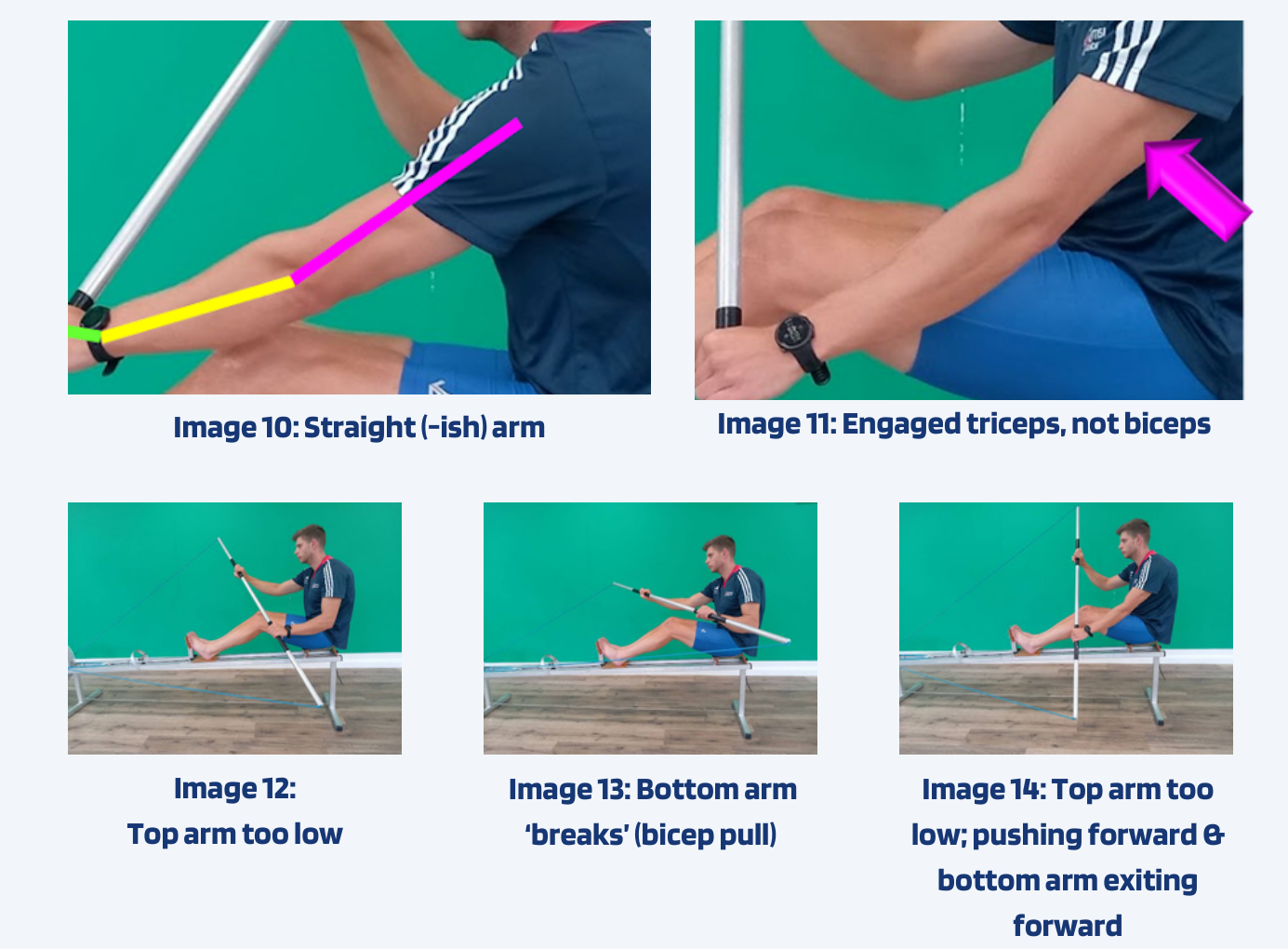
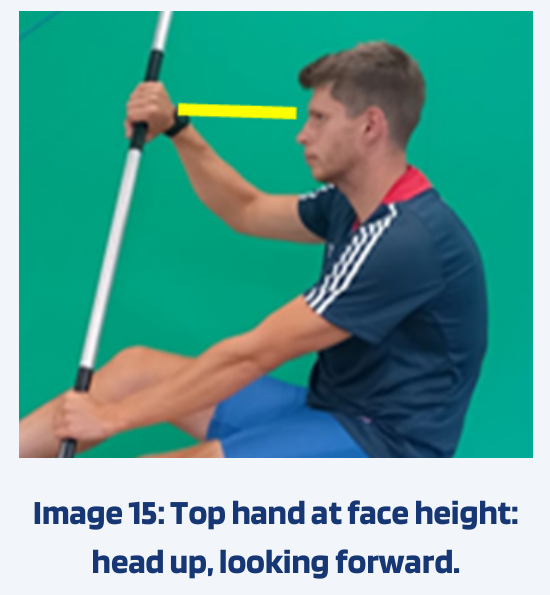
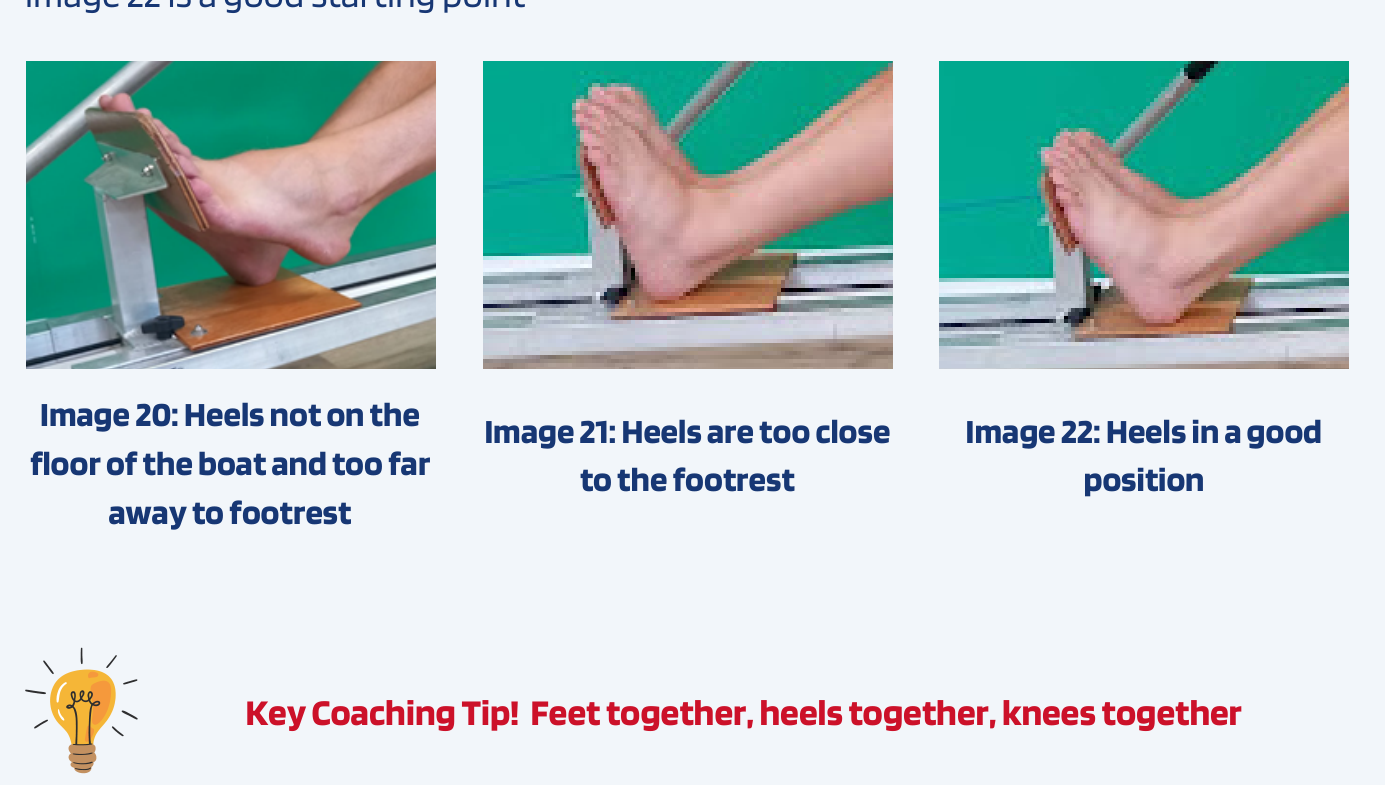
4.3 Exit and recovery
Slice at the hip. Sprint wants a fast exit so the boat carries acceleration into the other side.[4] Sea kayaking wants a clean exit that does not stall the hull or throw the shoulder behind the trunk.[2][3] Sprint feather is often 68–78°; sea paddles are commonly 0–45°, chosen for control in waves first.[1][6]
5. High angle and low angle
| Low angle (default cruise) | High angle (accelerate / headwind / sprint) | |
|---|---|---|
| Shaft | Flatter, lower top hand | More vertical, top hand near the face |
| Path | Catch at the toes, slight outward exit[2] | Tighter to the hull[3][4] |
| Paddle | NWOC example: about 210 cm on a ~22 in kayak, then fit the person[2] | Shorter sprint shafts; if in doubt, smaller and shorter[1][6] |
| Use | Distance, beam wind, moderate waves, shoulders | Leaving the beach, wind gaps, catching a run |
| Risk | Sweeping into a turn; scooping with a low top hand | Shoulder impingement; more roll; the blade “catching” a steep wave |
Most paddlers sit between the two. Elbows soft, shoulders low, rotation first.[2] For a burst of speed, shorten the stroke and raise cadence without switching to an arm-only pull.[2]
6. Different bodies: length, grip, mass, mobility
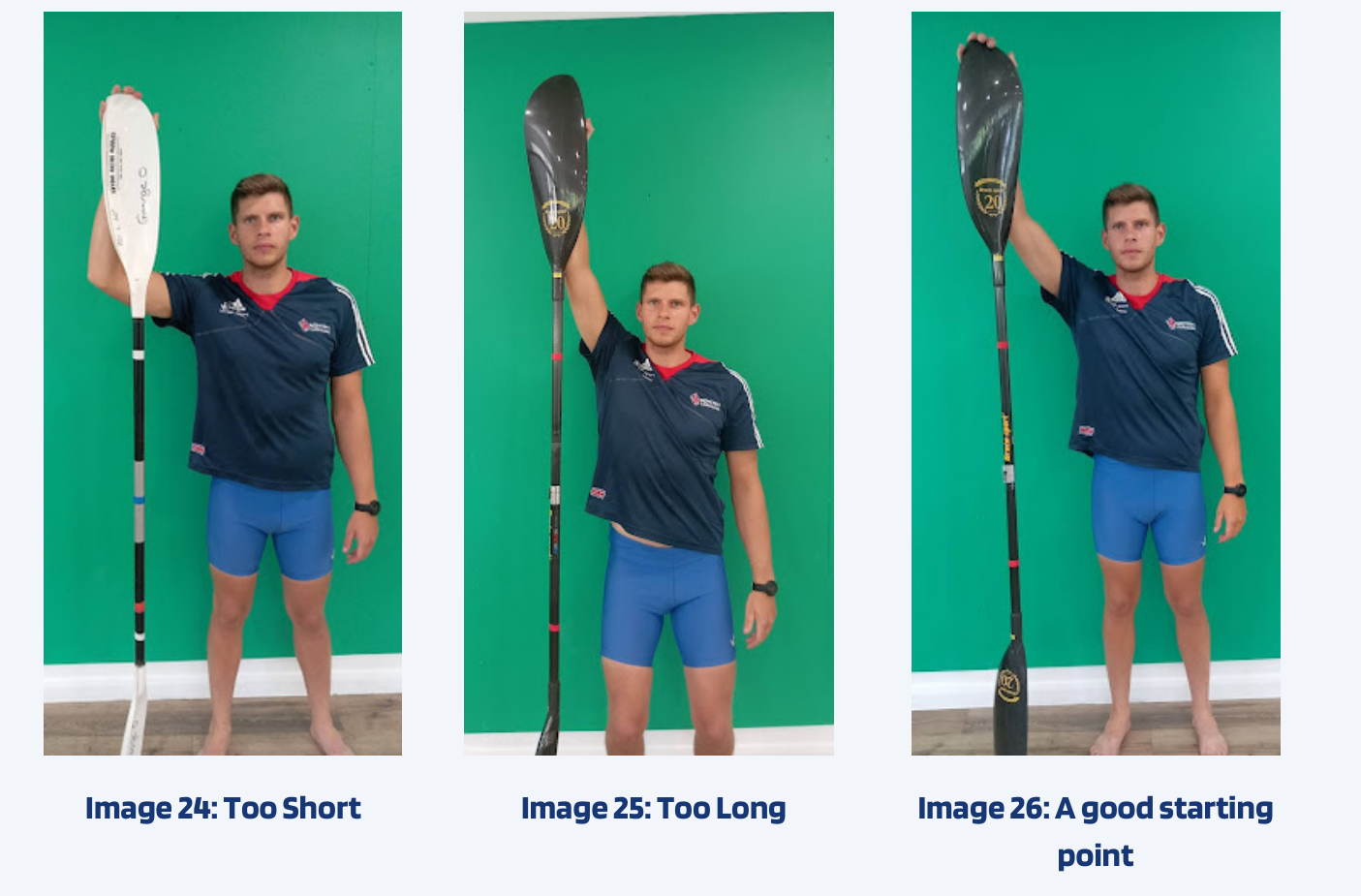
British Canoeing starting point: stand the paddle up, barefoot, fingertips just over the top blade; then paddle on the head, elbows about 90°, for grip width.[6] ICF: when unsure, smaller blade and shorter shaft so beginners can still feel a catch.[1][6]
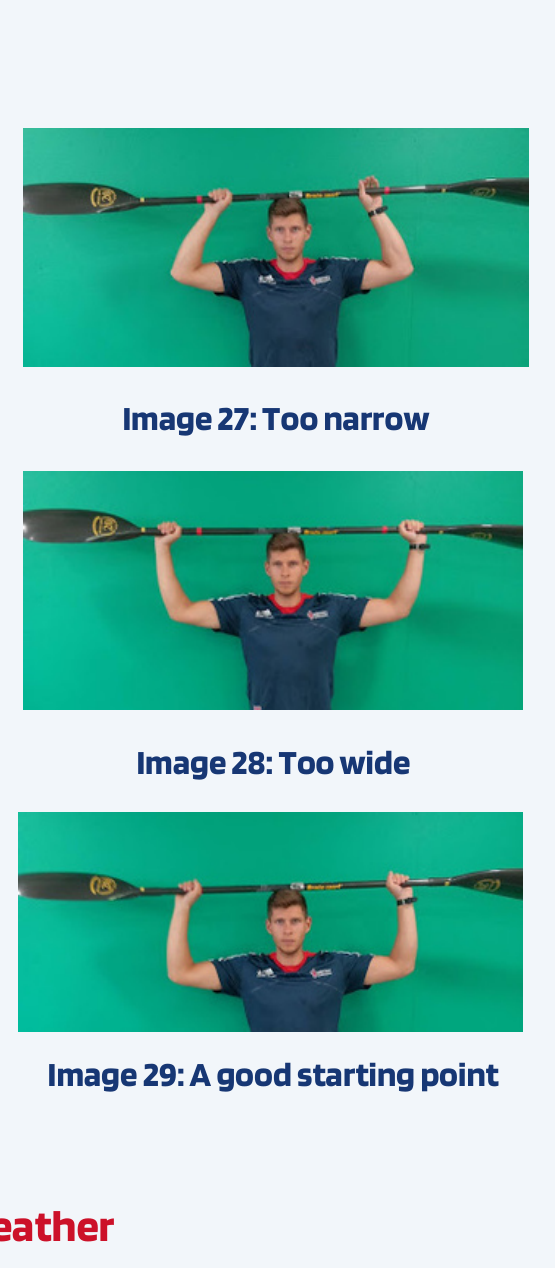
Elite K1 200 m peak blade force can exceed about 450 N at 120–130 spm.[9] That is not a touring target. Left–right force or velocity asymmetry above about 10% is linked in sprint literature to shoulder overload;[9] on a sea course it usually shows up as a boat that always turns one way — film both catches before you add volume.
7. Wind, waves, current, shallows
- Headwind: aerodynamic share rises, especially for light paddlers.[1] Slightly higher angle, shorter stroke, flat recovery blade.
- Tailwind: lower rate and more glide; correct weathercocking with a little sweep, not random extra force.
- Beam wind: a slight sweep bias on the windward side, or a little edge.[5] Do not hold the top blade up as a sail.
- Waves: shorter, brace-ready strokes; earlier exits so the blade does not scoop a crest.
- Current: ferry angle and ranges from ETC, not an ever-wider forward stroke.[8]
- Shallow water: the hull feels heavier.[1] Do not hunt speed by pulling past the hip.
8. Faults both literatures agree on
- Arms only.[2][3][5]
- Collapsed sit, backband, looking down.[6]
- Pulling before the blade is buried.[3][9]
- Past the hip, scooping the exit.[3][5]
- Path and shaft angle fighting each other.[2][3]
- Thumbs hitting the hull: usually no rotation.[2]
- Feet off the rest to steer.[6]
9. Teaching order (flat water, then sea)
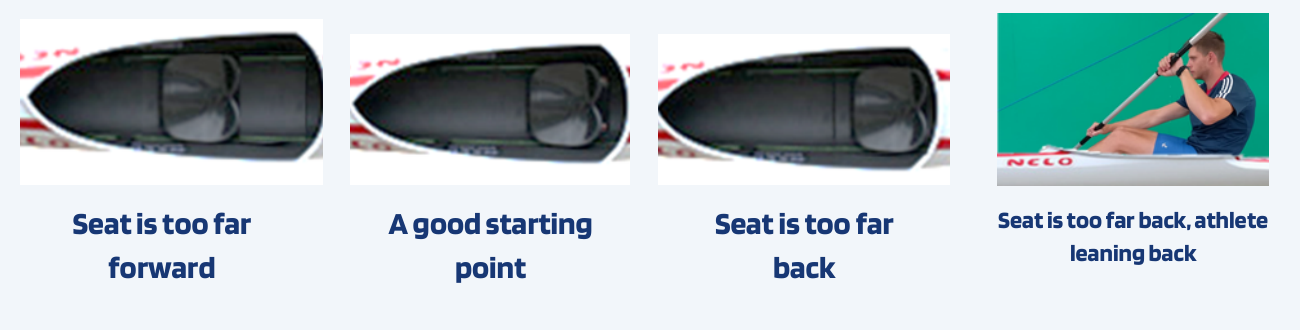
- Seat and footrests: soft knees, heels down, sit tall.
- Paddler’s Box and tape on the shaft for grip.[6][8]
- Straight-arm or paddle-on-chest rotation drills.[2][3]
- Same-side foot pressure, then hip drive.[6]
- Tape on deck beyond the toes for catch.[3]
- Slice at the hip; watch the exit spray.
- Twenty low-angle cruising strokes, then ten high-angle accelerations — two geometries, not one “harder paddle”.
- Beam wind and small waves: the forward stroke must be able to become a low brace without a reset.
A perfect peg on a lake yields to a planted blade, a connected body, and a boat that is still moving when Langkawi puts wind on the bow. The standard does not drop; the order of what you protect changes with the sea.
Sources
Superscripts match the list. Sprint figures are not sea-kayak pass/fail criteria.
- International Canoe Federation. Canoe Sprint Coaching Manual (Level 2–3 text; Level 1 NYOMDA is the historical Level 1 title). canoeicf.com/resources; PDF: icf_csp_coaches_manual_level_23_.pdf.
- Northwest Outdoor Center. nwoc.com.
- Holmes / CanoeSport Outfitters. canoesportoutfitters.com.
- Ventura Canoe & Kayak Club. venturacanoekayak.org.
- PaddleGeek. paddlegeek.co.uk. Catch photo from that page.
- Hynds / British Canoeing. Boat, Body, Blade — Guide 1. PDF. Photos cropped from that guide for teaching citation only.
- Jackson et al., 2011. doi:10.1177/1754337111407793.
- ETC. Chapter 6 Sea Kayak Skills. PDF.
- PoinT GO Research summary, citing Smolarczyk et al. (2020), Tze et al. (2018), Ackland et al. (2003). research.poin-t-go.com.
No generative-AI images. British Canoeing stills and the PaddleGeek photo are used as citations. We will remove them if a rights holder asks.